Resistance bands cover more movement patterns per dollar than any other piece of home gym equipment. A study published in SAGE Open Medicine (2019) reviewed elastic-resistance training across multiple populations and concluded that bands produce strength gains comparable to conventional resistance equipment when matched for effort and progression. The research is not new and not controversial. Bands work.
What people get wrong is buying the wrong type. There are four distinct band categories and each is good at different things. Buying one set and trying to make it cover everything is how you end up frustrated and convinced bands are a downgrade. They're not — but you need the right one for what you're doing.
This guide covers all four categories, the specific products worth buying in each, and what you can skip.
The Four Categories#
1. Tube bands with handles. The kind with plastic D-handles on each end and a door anchor in the box. Best for upper body — chest pressing, rows, curls, triceps, shoulder work. The handles let you replicate dumbbell and cable-machine movements precisely.
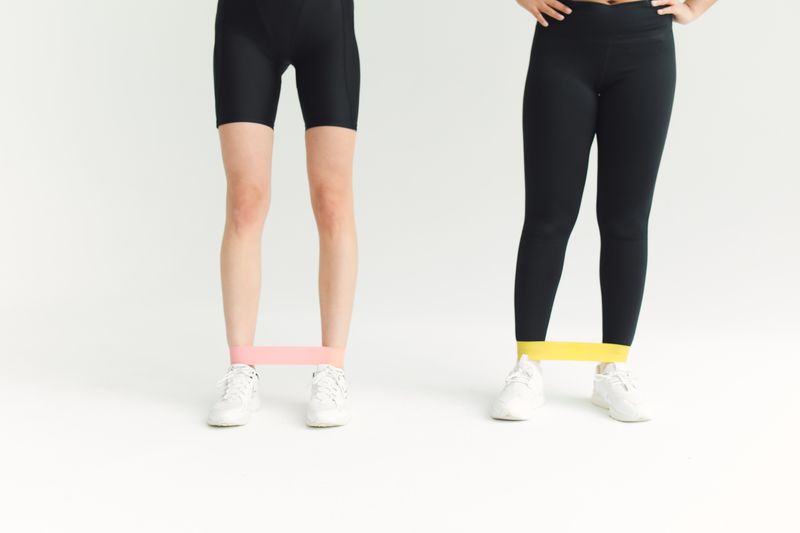
2. Mini loop bands (small). Continuous loops about 12 inches long. Best for lower body — glute activation, lateral walks, hip work. Also useful for upper body warm-ups (band pull-aparts).
3. Power loop bands (large). Continuous loops about 41 inches long. Originally sold as pull-up assistance, but they double as a heavy resistance source for squats, deadlifts, and barbell-style movements when you anchor them to the floor. The most versatile single piece of band equipment if you can only buy one.
4. Flat therapy bands. Long flat bands with no handles or loops. Used in physical therapy and rehab. Light enough for shoulder rehab, prehab, and slow controlled mobility work.
Almost everyone needs categories 1 and 2 to start. Categories 3 and 4 fill specific gaps as your training matures.
What to Look For#
Latex vs. fabric. Latex bands stretch further and provide smooth resistance throughout the range. Fabric bands (the cloth-covered kind sold for booty work) feel more comfortable on bare skin but don't stretch as far and have a harder upper end. For general training, buy latex. Fabric is fine for specific lower-body activation work.
Layered construction. Better tube bands are made from layered latex — multiple thin sheets bonded together. They snap less often than single-extruded bands and feel smoother. Bodylastics, the leader in this category, has used layered construction for over 15 years.
Anchor system. A door anchor (a webbed strap with a foam ball or block on one end) lets you attach a band to any closed door. This single accessory is what turns bands from "okay for some exercises" into "complete cable machine substitute." Don't buy a tube set without one.
Color coding. Reputable brands use consistent color coding for resistance levels — typically yellow (lightest), green, red, blue, black (heaviest). Cheap sets often have inconsistent or made-up color systems. Stick with brands that have been around long enough to standardize.
Tube Bands With Handles#
The single most useful purchase in the band category. A good stackable tube set with a door anchor replaces $1,500 worth of cable machine for upper body training.
Six bands of graduated resistance, two handles, door anchor, ankle straps. Stackable up to 96 lbs of combined tension. Anti-snap inner cord (keeps the band intact even if the latex tears — important safety feature). The category standard.
Check price on AmazonThe "anti-snap" cord is the feature that justifies paying $28 instead of $15 for a generic tube set. Cheap tube bands fail by snapping back at your face. Bodylastics has a kevlar-style cord running through the latex tube — if the latex fails, the cord prevents recoil.
If you specifically don't need stacking and just want a single set, the Whatafit Resistance Band Set runs about $20 and is the next-best option. Same general design, slightly less robust build. Skip it if you can spend the extra $8 on the Bodylastics.
Mini Loop Bands#
Buy a set of 5 graduated loops. Use them for lower body activation (squats with a loop above the knees), lateral walks, glute bridges with a loop, and band pull-aparts.
Five latex loops in graduated resistances (5–30 lbs equivalent). Carrying bag and exercise card included. Over 130,000 reviews. The default recommendation in this category for years.
Check price on AmazonIf you specifically want fabric loops (more comfortable for higher-volume booty work), the Te-Rich Fabric Resistance Bands run about $18 for a set of 3. Only worth it if the latex loops bother your skin.
Power Loop Bands#
This is the band that does the most work if you only own one. A single 41-inch loop band of moderate resistance is your pull-up assist, your floor-anchored squat resistance, your deadlift accommodation, and your stretching strap.
A single 41-inch latex loop. Get the green or blue (medium tension) for most uses. Buy a second band in a different tension if you want to pair them for heavier loaded work or do progressive pull-up assistance. Built for CrossFit-style use, holds up to years of regular load.
Check price on AmazonThe reason to buy a single band rather than the full WODFitters set ($45) is most people only need one. If you already do pull-ups unassisted, buy the medium for stretching and floor-anchored work. If you're working toward your first pull-up, buy the heavy.
Flat Therapy Bands#
You only need this category if you do specific shoulder rehab work, have a known mobility limitation, or follow a structured prehab routine. For 95% of home trainers, the tube bands cover what flat bands would.
Five-foot continuous flat band. Available in graduated resistances from extra-light to special-heavy. The medical and rehab standard. Worth it specifically for shoulder external rotation work and structured prehab routines.
Check price on AmazonWhat to Skip#
"Resistance band sets" with 11 pieces and a yoga mat for $25. The bands in these are usually thin single-extruded latex with no anti-snap cord. The handles are flimsy plastic. The door anchor falls apart. Skip the bundle and buy two real items separately.
"Smart" bands with sensors and apps. Adds cost, adds failure points, doesn't make the training better.
Fabric bands for upper body. Fabric loops don't stretch enough to do upper body movements correctly. Limit fabric to lower body activation work.
Anchored "home gym" rigs that mount bands to a single point. These add complexity and cost without solving a problem. A $5 door anchor does the same thing.
What This Costs and What You Get#
| Item | Approximate Cost |
|---|---|
| Bodylastics Tube Set | $28 |
| Fit Simplify Loop Set | $12 |
| WODFitters Single Loop | $18 |
| TheraBand (optional) | $15 |
| Tube + loops + power band | $58 |
| All four categories | $73 |
For under $60 you have full upper body training, lower body activation, pull-up assistance and a heavy resistance source for compound work. That's a complete home strength setup with no maintenance, no storage burden, and no parts to break.
How to Actually Use Them#
The fastest way to get value from a band purchase is to use them in a structured program rather than as a "warmup tool."
For a complete starter routine, the 5 home gym pieces under $50 post outlines how bands fit alongside other budget equipment. For a band-only program, three days a week of upper body push, upper body pull, and lower body — using the tube set for compound movements and the loop for activation — covers the fundamentals.
Do this today: If you have nothing, buy the Bodylastics tube set first. It does the most work. Add the loop set next month if you want lower body activation, and the power loop band after that if you want a single piece that scales with you for years.