The supplement industry wants you to believe that getting enough protein requires a $40 tub of powder. It doesn't. The five foods in this article provide more protein per dollar than most products on the market, and they come with vitamins, minerals, and other nutrients that a scoop of powder does not.
Here's what the numbers actually look like, and how to build meals around each one.
Why Protein Matters for Budget Training#
When you exercise, you create small tears in muscle fibers. Protein provides the amino acids your body uses to repair and rebuild those fibers stronger. The International Society of Sports Nutrition recommends 0.7 to 1 gram of protein per pound of bodyweight daily for active adults. For a 160-pound person, that's 112 to 160 grams per day.
The question is how to hit that number without spending a lot of money. The answer is buying protein by the gram, not by the serving-size claim on the front of a package.
The Cheapest Protein Sources, Ranked#
These cost estimates come from typical US grocery prices in 2026. Prices vary by region and store, but the rankings hold across most markets.
1. Dried lentils: roughly $0.35 per 30 grams of protein
Lentils are the most cost-effective protein source in most grocery stores. One pound of dried lentils (around $1.50) yields about 8 cups cooked and delivers roughly 56 grams of protein. They cook in 20 to 25 minutes without soaking, making them more practical than most dried beans. Lentils are also a complete protein source when combined with rice, providing all essential amino acids in one inexpensive meal.
Beyond protein, lentils provide around 15 grams of fiber per cooked cup, which slows digestion and supports the kind of steady energy that training requires. The USDA nutrient database lists cooked lentils at roughly 18 grams of protein per cup.
2. Dried black beans: roughly $0.34 per 30 grams of protein
Similar cost to lentils, with slightly more cooking time (around 90 minutes if you don't soak them, 45 minutes if you do). One pound of dried black beans costs around $1.50 and yields 7 cups cooked with about 60 grams of total protein. Black beans have a slightly higher carbohydrate content than lentils, making them a particularly good option around training sessions when glycogen replenishment matters.
3. Canned sardines: roughly $0.78 per 30 grams of protein
Sardines are the most nutritionally dense item on this list by a significant margin. A 4-ounce serving provides 28 grams of protein, over 1,100 mg of combined EPA and DHA omega-3 fatty acids, 428 percent of the daily value for vitamin B12, and 34 percent of the daily value for calcium (because they're packed with bones). Most canned sardines run $1.50 to $2 per can. That's complete protein and a meaningful dose of anti-inflammatory omega-3s for less than two dollars.
The omega-3 content matters specifically for recovery. Research consistently links EPA and DHA to reduced exercise-induced inflammation and faster muscle repair. Most people eating on a budget don't get enough of either.
4. Eggs: roughly $0.88 per 30 grams of protein
Eggs remain one of the most researched and well-understood protein sources in nutrition science. Each large egg contains around 6 grams of complete protein with a biological value (how efficiently the body uses the protein) consistently rated among the highest of any food. A dozen eggs at $3 to $4 delivers 72 grams of protein.
Eggs also provide leucine, the amino acid most responsible for triggering muscle protein synthesis. Research published in the Journal of the American College of Nutrition found that whole eggs produced greater muscle protein synthesis than egg whites alone after resistance exercise, suggesting the fat in the yolk plays a supporting role.
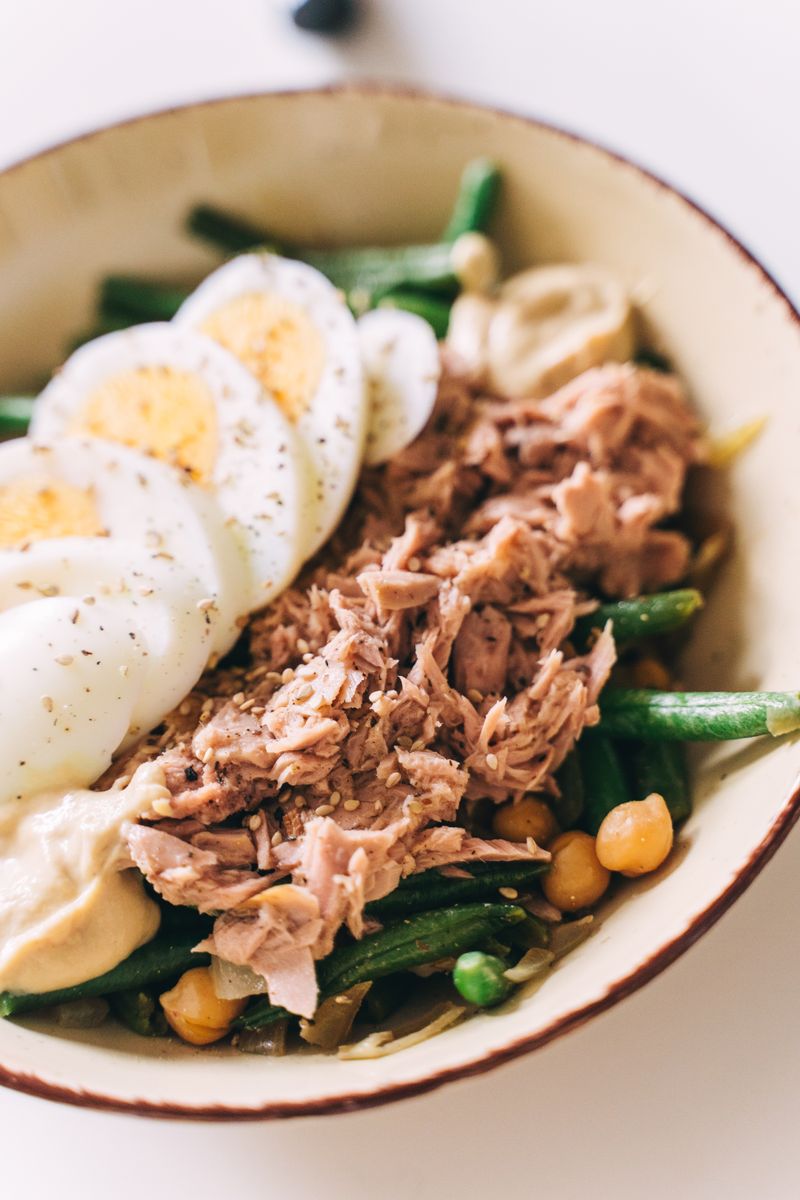
5. Canned tuna: roughly $0.90 per 30 grams of protein
A standard 5-ounce can of tuna in water contains around 25 grams of protein for roughly $1 to $1.50. Tuna is shelf-stable, requires no cooking, and can be eaten straight from the can if needed. Like sardines, it delivers omega-3s, though at a lower dose.
One note: canned light tuna (skipjack) has lower mercury levels than albacore ("white" tuna). The FDA's current guidance recommends limiting albacore to one serving per week and light tuna to two to three servings per week for most adults.
What These Foods Cost Compared to Protein Powder#
A popular mid-range whey protein powder delivers protein at roughly $0.80 to $1.20 per 30 grams, depending on the brand and where you buy it. That puts it in the same range as eggs and tuna, and more expensive than lentils and black beans.
The difference is that a can of sardines or a cup of lentils also brings fiber, vitamins, minerals, and whole food calories. Protein powder delivers protein and little else. For most people eating on a budget, whole food protein sources are the better investment.
How to Hit Your Daily Target#
A realistic day of budget protein eating might look like:
- Breakfast: 3 eggs scrambled (18g protein)
- Lunch: 1 can tuna over rice with hot sauce (25g protein)
- Dinner: 1.5 cups cooked lentil soup with canned tomatoes (27g protein)
- Snack: 1 can sardines with crackers or on toast (28g protein)
Total: roughly 98 grams. Add one more egg or a half cup of black beans to get to 110 grams. That's enough to support training for most people in the 140 to 170-pound range, for a food cost well under $10.
The One Thing That Matters Most#
The research on protein timing, protein type, and protein sources is interesting. But the variable that matters most for most people is whether they're hitting their daily target consistently. Grams per day, across days, beats optimizing any single meal.
The foods on this list make hitting that target affordable. A jar of peanut butter, a bag of lentils, a flat of eggs, and a few cans of fish in the pantry means you're covered for protein for most of the week regardless of what else is going on.
Do this today: Calculate your rough daily protein target (your bodyweight in pounds, multiplied by 0.7 to 1). Then check what protein sources you already have. If you have eggs, a can of tuna, and some dried beans, you're most of the way there right now.