Fitness equipment has one of the best secondary markets of any product category. People buy it optimistically, use it inconsistently, and then sell it at deep discounts when they run out of motivation or space. Their loss is your opportunity.
Facebook Marketplace and Craigslist both surface this inventory constantly. The equipment is real, the prices are real, and in most mid-size cities you can find a full home gym setup for under $200 if you know what to look for and when to look.
Why the Secondary Market for Fitness Equipment Is Good#
Fitness equipment is durable by design. Cast iron dumbbells and kettlebells do not wear out. Steel pull-up bars last indefinitely. A quality bench from a discontinued product line is structurally identical to the new version at twice the price.
The main reason to hesitate on used gear is condition: rust, cracked rubber, frayed cables, or bent frames. All of these are detectable with a brief inspection, and sellers who list in good faith usually photograph accurately. Sellers who obscure condition are a one-way filter: skip any listing that does not show clear photos of the item up close.
The result is a used market where most items are fine and priced at 30 to 70 percent below retail.
When to Look#
Supply in the fitness equipment secondary market follows predictable seasonal patterns.
Late January and February are the peak times. Resolution gym equipment arrives at homes in December and January, fails to get used as expected, and floods Marketplace by mid-February. This is when you find the most listings at the lowest prices.
March through April is another good window as spring cleaning motivates people to clear garage and basement equipment.
September brings a smaller wave as summer ends and people reassess whether the treadmill taking up half the spare room is worth keeping.
December is the worst time to buy. Holiday shopping inflates prices and reduces urgency among sellers.
What to Search For#
Use specific search terms rather than generic ones. "Dumbbells" returns a huge volume of listings. "Dumbbells 25 lb pair" returns exactly what you want at the price range you can evaluate immediately.
Useful search terms by category:
- Dumbbells: search by specific weight ("35 lb dumbbells", "dumbbell set 20 lbs")
- Kettlebells: "kettlebell 35 lb" or "kettlebell set"
- Pull-up bar: "doorframe pull up bar", "pull up bar"
- Barbell and plates: "olympic weights", "barbell plates", "weight plates"
- Resistance bands: "resistance bands set" (less inventory, lower prices anyway)
- Cardio equipment: "treadmill", "stationary bike", "rowing machine"
For cardio equipment specifically, proximity matters: you need to pick it up, and negotiating delivery logistics for a treadmill is complex.
What to Buy Used#
Cast Iron and Steel Weights#
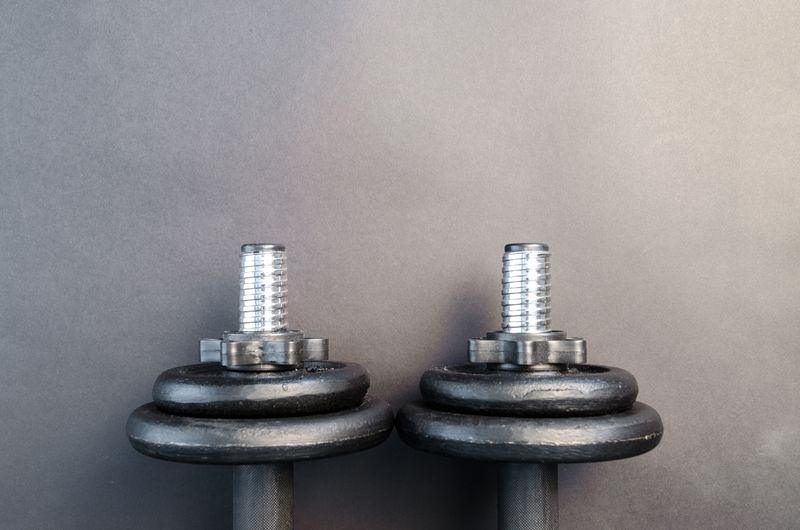
Dumbbells, kettlebells, barbells, and weight plates are the best used fitness buys available. Cast iron does not rust through, it does not lose integrity, and it performs identically whether it is new or twenty years old. If you need guidance on weights and brands before shopping used, the budget kettlebell buying guide covers what to look for. Common used prices:
- Fixed dumbbells: $0.50 to $1 per pound (so a pair of 25s costs $25 to $50)
- Olympic plates: $0.50 to $1.50 per pound
- Kettlebells: $0.75 to $1.50 per pound
If you see fixed dumbbells at $0.50 per pound, that is a fair price. At $0.30 or less, buy immediately.
Benches#
A flat bench is a flat bench. The structural components are steel, and they do not wear out. Inspect for cracks in the frame welds and check that the padding is not torn in a way that will chew up clothing. Adjust the price accordingly if padding needs replacing (foam and vinyl repair kits cost $20 to $30).
Pull-Up Bars (Wall-Mounted or Freestanding)#
Doorframe pull-up bars are cheap new ($25 to $35) and show up on Marketplace constantly for $5 to $10. Wall-mounted and freestanding pull-up stations are worth buying used if the welds look clean and the bar surface is not excessively worn.
Foam Rollers, Mats, and Accessories#
New foam rollers cost $12 to $20 and are not worth the used market hassle. Yoga mats that have been used collect skin cells and sweat; buying them used is reasonable if you plan to clean them thoroughly, but new options at $15 to $20 do not require that consideration.
What to Skip Used#
Resistance Bands#
Bands degrade over time through UV exposure and repeated stretching. A used band that looks fine can snap under load. Buy bands new — the resistance bands buying guide covers which types to buy and what to spend. They cost $15 to $30 and the peace of mind is worth the small premium.
Older Cardio Equipment With Belts and Motors#
Treadmills and ellipticals that are more than five to seven years old have motor and belt wear that is difficult to assess visually. Repair costs for cardio equipment can exceed the value of the machine. If you want used cardio equipment, focus on magnetic resistance bikes and rowing machines, which have fewer failure-prone components than motorized treadmills.
Anything Without a Full Photo#
Skip listings with a single blurry photo, photos taken from a distance only, or no photos at all. Sellers who are proud of their equipment photograph it clearly. Sellers trying to move damaged goods do not.
Inspection Checklist Before You Buy#
When you arrive to pick up equipment, check the following before handing over money:
For all iron and steel weights: Look for hairline cracks, especially where handles meet plates. Slight surface rust is normal and does not affect function; rust that is flaking or deep indicates extended moisture exposure. Weigh the items on a scale if you have one handy.
For benches: Push down firmly on the seat and the back pad. Check that nothing flexes more than slightly. Grab the frame at multiple points and test for wobble. Inspect the weld points at the frame corners and leg attachment points.
For pull-up bars: Test the locking mechanism. For doorframe bars, the plastic end caps that contact the doorframe wear down over time. Check that the locking pins or adjustment mechanisms move freely.
For any cardio equipment: Plug it in and run it for two to three minutes before you commit. Listen for unusual sounds from the motor or belt. Ask when the belt was last lubricated (for treadmills). If the seller does not know or has never done it, factor in a belt replacement.
Negotiating#
Most sellers on Marketplace are open to reasonable offers, particularly if the item has been listed for more than a week. A 10 to 20 percent reduction from the asking price is commonly accepted without friction. More than that requires a specific reason (visible wear, missing accessories, needing significant cleaning).
Paying cash and being willing to pick up immediately are the two strongest negotiating advantages you have. Sellers prefer not to hold items, and payment uncertainty is the main thing that kills deals.
The Free Tier#
Check the "Free" category on Marketplace regularly. Fitness equipment appears there more often than you would expect. Items that are too large to store and too low-value to bother selling often get listed for free to whoever will haul them away. Older treadmills, foam rollers, and odd-weight dumbbells are common finds.
A brief weekly check of the free listings in your area costs nothing.
Do this today: Open Facebook Marketplace and search for "dumbbells" in your area. Set a price filter of $0 to $60 and see what's available. In most cities, this search surfaces usable equipment immediately. If you see fixed-weight dumbbells at under $1 per pound, that is a deal worth acting on.