Recovery is the part of training that gets the least equipment money and produces the most consistent return. A foam roller and a lacrosse ball — total cost $25 — cover the vast majority of what a $300 massage gun does, plus things the massage gun can't reach.
The research backs this up. A 2015 meta-analysis in the Journal of Athletic Training concluded that foam rolling reduces delayed-onset muscle soreness (DOMS) and improves perceived recovery in the 24–72 hour window after intense training. A separate review in the International Journal of Sports Physical Therapy (2020) found that targeted ball-based self-myofascial release was at least as effective as foam rolling for small-area trigger points.
What you don't need is more equipment. You need the two right pieces and a five-minute routine you'll actually do.
What to Buy#
The whole kit is two items. Maybe three if you have specific neck or upper back issues.
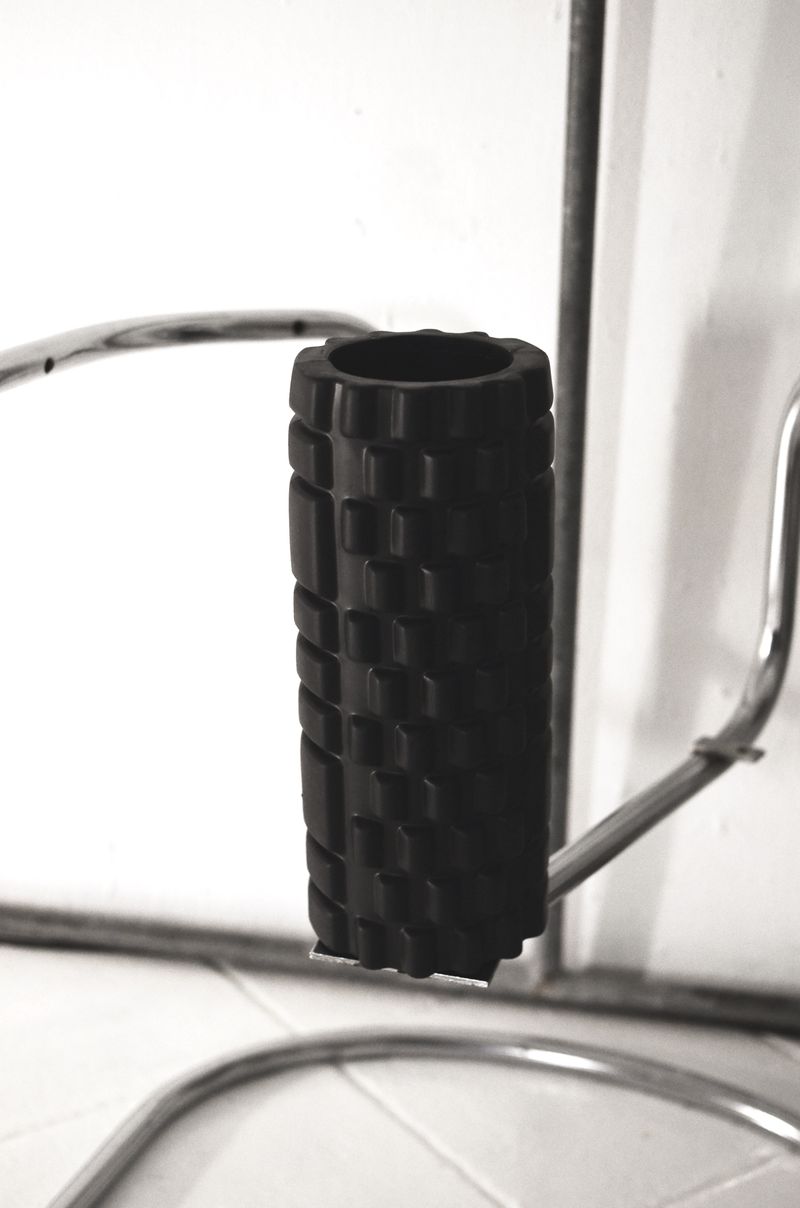
High-density EPP foam that stays firm and doesn't compress over time — the failure mode of cheaper rollers. Available in 12-inch (travel) or 18-inch (most useful for back work). Get the 18-inch unless storage is a real constraint.
Check price on AmazonStandard-issue lacrosse balls — solid rubber, 2.5 inches across, hard. Buy a pair so you can put two side-by-side under your spine for thoracic work. Any sporting goods brand works; these aren't a specialty item.
Check price on AmazonThat's the kit. Total: $25, sometimes less. The optional third piece, only if you specifically have neck and shoulder issues:
A slightly softer, smaller, branded massage ball designed for neck, jaw, foot arch, and shoulder trigger points where a lacrosse ball is too aggressive. Optional but useful if a lacrosse ball feels like too much.
Check price on AmazonWhat to Skip#
Vibrating foam rollers ($60–120). The research on vibration adding meaningful benefit over standard rolling is weak. The motor is a failure point. Skip.
Textured "trigger point" rollers ($35–50). The bumpy surface looks medical but offers no measurable advantage over a smooth roller for most users. Some people find it more painful, which is not the same as more effective. Smooth high-density foam is the standard.
Massage guns ($150–600). Covered separately in you don't need a $200 massage gun to recover well. The short version: a foam roller and lacrosse ball produce the same outcomes for the vast majority of users at 1/15th the cost. Massage guns are convenient for travel and good marketing, but they don't unlock benefits the basic kit doesn't.
Cork or wood rollers. Premium materials, no functional advantage, harder on most surfaces.
The Five-Minute Routine#
After every training session — including walks, runs, lifting, and rucking — go through this. It takes five minutes once you know it.
1. Calves on the foam roller (45 seconds per side). Sit on the floor, foam roller under one calf. Cross your other leg over for added pressure. Roll slowly from ankle to just below the knee, pausing 5–10 seconds on tight spots.
2. Hamstrings on the foam roller (45 seconds per side). Same setup, roller now under one hamstring. Roll from just above the knee to the glutes.
3. Glutes on the lacrosse ball (45 seconds per side). Sit on the floor, lacrosse ball under one glute, the other leg crossed over. Lean into the ball and slowly shift your weight to find tight spots. Hold pressure on each spot 15–20 seconds.
4. Quads on the foam roller (45 seconds per side). Lie face-down with the roller under one quad. Roll from just above the knee to the hip flexor.
5. Thoracic extension on the foam roller (60 seconds). Lie on your back, roller positioned across your upper back at the bottom of the shoulder blades. Hands behind your head. Lift your hips slightly and use small movements to roll the upper back. Pause and arch backward over the roller for spine extension. This single movement counters most of the damage that desk work and phone-staring does to upper back posture.
That's it. Five exercises, five minutes, the sequence covers every major muscle group that benefits most from rolling.
What NOT to Roll#
The IT band. The IT band itself is dense connective tissue that doesn't meaningfully change in length from rolling. Aggressive rolling of the IT band is painful, doesn't accomplish what people think it accomplishes, and can irritate the underlying tissue. A 2020 paper in the International Journal of Sports Physical Therapy explicitly cautioned against direct IT band rolling. If your lateral leg is tight, roll the surrounding muscles (TFL near the hip, vastus lateralis on the front of the thigh, glutes) instead.
The lower back directly. Rolling the lumbar spine compresses spinal structures that aren't designed for that load. Roll the upper back and the hips. The lower back rarely needs direct rolling — when it's tight, it's usually a downstream symptom of tight hips or weak glutes, neither of which is fixed by rolling the lumbar.
The neck or directly on bone. Use a small ball (TP Therapy or tennis ball) on neck musculature and skip anything bony.
Recently injured tissue. Foam rolling an acute strain or contusion can extend the recovery window. Wait at least 72 hours after a real injury before rolling the area, and start gentle.
When to Add Anything Else#
Most home trainees never need to add anything beyond the basic kit. The two situations where adding equipment becomes reasonable:
You travel more than 4 days a month. A massage gun fits in a bag better than a roller. The convenience is real. Buy a budget gun in the $40–80 range, not a $300 one.
You have a specific recurring issue (chronic neck tension, plantar fasciitis, etc.) that the basic kit can't reach effectively. Pairing the kit with a proper warm-up routine also helps reduce how often those issues flare up. Add the targeted ball, or see a physical therapist once. A single PT visit costs less than a massage gun and produces a more specific treatment plan.
What This Replaces#
| Equivalent commercial product | Cost | This kit |
|---|---|---|
| Theragun Pro | $599 | $25 |
| Hyperice Hypervolt 2 | $299 | $25 |
| Compex Fixx 1.0 | $179 | $25 |
| In-person massage (per session) | $80–150 | $25 once |
The first time you do the routine after a hard workout and feel measurably better the next morning, you'll understand why this kit has stayed essentially unchanged for 30 years. It works. It doesn't break. It costs less than a tank of gas. The complete budget home gym setup includes a foam roller for the same reason — it earns its place.
Do this today: If you don't own a roller, order the Amazon Basics 18-inch and a pair of lacrosse balls. They'll arrive within two days. Run the five-minute routine after your next workout. You'll feel the difference within 48 hours.