A gallon of water costs about a dollar. It weighs 8.34 pounds. That is a free weight sitting in most kitchens and grocery stores, and it handles more exercises than most people realize.
The gallon jug is not a substitute for a full dumbbell set. It is one weight at one load. But it is a functional training tool, it costs nothing, and the exercises below produce real results for anyone who does not yet own resistance equipment.
Why 8 Pounds Is More Than It Sounds#
Eight pounds at the end of a lever arm is not eight pounds. As you extend your arm away from your body, the effective load at the shoulder joint increases with distance. A one-arm lateral raise with an 8-pound jug at full extension creates substantially more shoulder demand than holding the same jug at your side.
Eight pounds is also meaningful for movements where the load works against gravity through a long range of motion. A Romanian deadlift holding a gallon jug is not challenging for the lower body, but a one-arm row at the right angle provides a useful upper body stimulus.
The jug is most effective for upper body exercises, particularly those targeting smaller muscle groups (shoulders, biceps, triceps) and as a teaching tool for larger movement patterns before adding real load.
Weight Adjustment#
A gallon jug has a natural weight adjustment system: the water inside. A half-full jug weighs about 4 pounds. Three-quarters full is roughly 6.2 pounds. Full is 8.3 pounds.
For most people, starting at three-quarters to full is the right call.
If you need more than 8 pounds for lower body work, a 2.5-gallon water jug (roughly 20 pounds full) works for farmer's carries, goblet squats, and Romanian deadlifts. A 5-gallon bucket filled with water weighs about 41 pounds, which is enough to make most lower body exercises genuinely challenging.
Exercises That Work#
Goblet Squat#
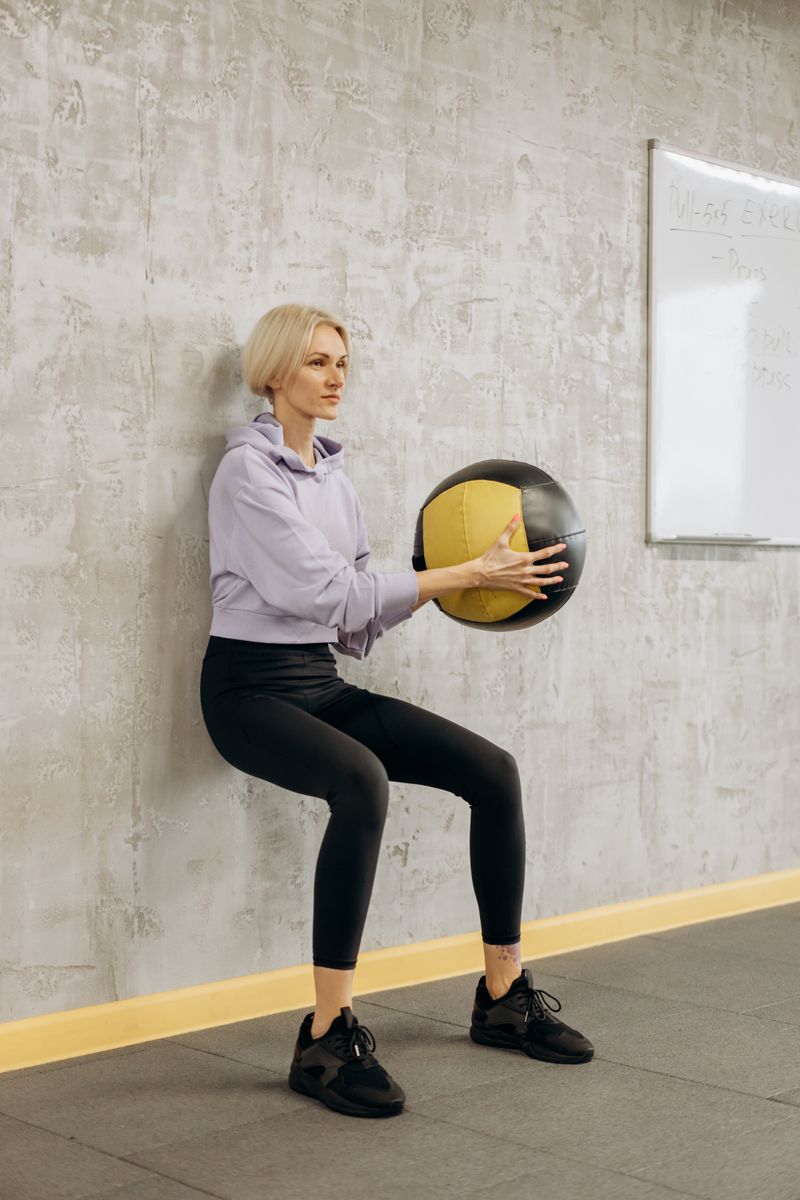
Hold the jug by the handle with both hands at chest height, elbows pointing down. Squat. The front-loaded position helps you sit back and maintain an upright torso, which is the main coaching correction most people need for squats.
The goblet squat with a jug is a useful teaching tool before transitioning to heavier goblet squats with a ketlebell. The movement pattern is identical, and the jug teaches the holding position.
Farmer's Carry#
Grip the handle and walk. That is the full description. Farmer's carries build grip strength, shoulder stability, core endurance, and cardiovascular conditioning simultaneously. The key technique point: do not lean toward the jug. Stand tall with equal weight through both feet and allow the jug to challenge your lateral core.
Carry for 30 to 60 seconds or a specific distance. For one-side carries, alternate hands at each length.
One-Arm Row#
Hinge at the hip with your opposite hand resting on a table or chair for support. Let the jug hang at arm's length toward the floor, then row it toward your hip, keeping the elbow close to the body. Lower slowly.
The one-arm row with a jug is not a high-load exercise, but it is one of the few ways to train upper back pulling without a pull-up bar or resistance bands. For someone just building upper body strength, it is useful.
Romanian Deadlift#
Hold the jug with both hands in front of your thighs. Hinge at the hip, sending the hips back while lowering the jug toward the floor with a flat back. Return by driving the hips forward.
The jug is too light for an advanced trainee to feel meaningfully challenged in the lower body here. For a beginner or someone learning the hip hinge pattern, it provides just enough resistance to make the movement feel like work rather than a stretch.
Bicep Curl#
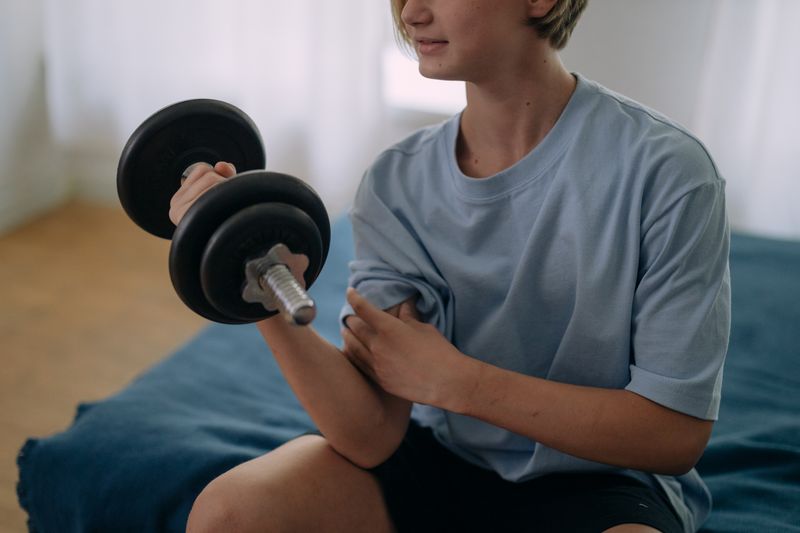
Hold the jug at your side, palm facing forward, and curl toward your shoulder. Lower slowly for full benefit.
A gallon jug is more effective for curls than most people expect because the offset weight of the water (which shifts as you move) adds an unpredictable element that activates the stabilizing forearm muscles throughout the movement. Three sets of fifteen reps per arm is enough to produce a training stimulus.
Overhead Press#
Stand with the jug at shoulder height, handle in both hands, and press overhead. Lower slowly. This requires complete lid security: confirm the cap is tightly closed before pressing anything overhead.
The overhead press with a jug trains the shoulders and triceps with a slightly offset load that challenges shoulder stability in a way a fixed dumbbell does not.
Lateral Raise#
Hold the jug at your side and raise your arm laterally to shoulder height. Lower slowly over three to four seconds. The slow negative is essential here: the lateral deltoid contracts eccentrically during the lowering phase and that is where the productive stimulus lives.
Three sets of twelve to fifteen slow lateral raises with an 8-pound jug produces noticeable shoulder fatigue in most people. The lighter load suits this exercise because the lateral deltoid is a relatively small muscle with limited strength.
A Gallon Jug Workout#
Warm-up
- Arm circles: 15 reps each direction
- Hip hinge bodyweight: 10 reps
- Bodyweight squat: 12 reps
Working sets
Goblet squat: 4 sets of 15 Rest 60 seconds
Farmer's carry: 4 carries of 45 seconds each side Rest 60 seconds
One-arm row: 3 sets of 12 per side Rest 60 seconds
Romanian deadlift: 3 sets of 12 Rest 60 seconds
Overhead press: 3 sets of 12 Rest 60 seconds
Bicep curl: 3 sets of 15 per side Rest 45 seconds
Lateral raise: 3 sets of 15 per side (slow, 3-second descent) Rest 60 seconds
Total time: 35 to 40 minutes.
The Honest Ceiling#
The gallon jug is an entry point, not a permanent tool. Once you can do four sets of fifteen goblet squats with a full jug and the last reps feel easy, you have outgrown it for lower body work. Once three sets of twelve one-arm rows feel light, you have outgrown it for upper back work.
At that point, the next step is a pair of adjustable dumbbells or fixed-weight dumbbells from Facebook Marketplace. The adjustable dumbbells versus kettlebell versus bands comparison covers what to buy when you are ready to move past improvised equipment.
The value of the jug period is threefold: it costs nothing, it teaches the movement patterns correctly, and it makes it easy to find out which exercises you actually enjoy and will do consistently before spending money on equipment for them.
Do this today: Fill a gallon jug completely and pick it up. Try three sets of goblet squats and three sets of one-arm rows. If those feel productive, you have an eight-dollar training setup sitting in your kitchen.