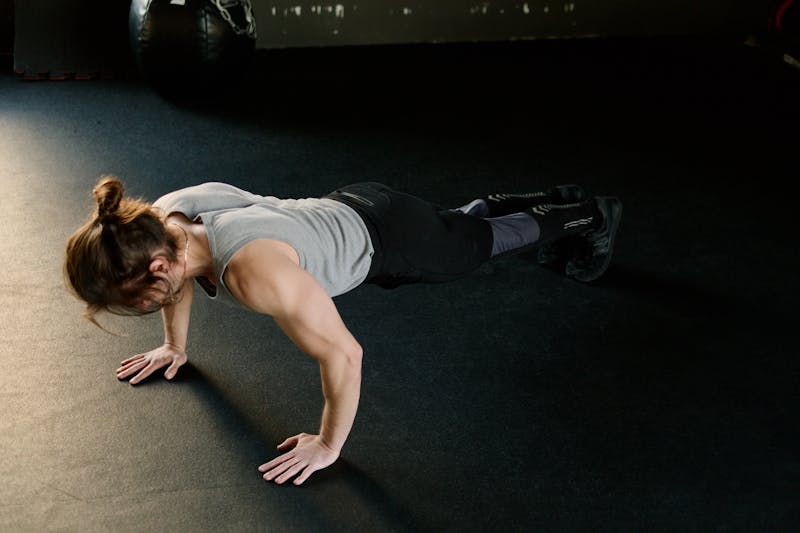
Three sessions per week is the standard recommendation for strength training. It works well. But three sessions per week is also a commitment that falls apart for many people during busy stretches: travel, demanding projects, family situations, or simply a schedule that doesn't consistently have three open slots.
The good news: two sessions per week isn't a compromise. For most people who aren't competing or chasing advanced strength goals, two well-designed sessions produce strength gains that are meaningfully different from three sessions only on paper.
A 2019 meta-analysis in the Journal of Strength and Conditioning Research reviewed 22 studies comparing training frequency outcomes and found that differences between 2-day and 3-day frequencies were small and often statistically insignificant when total volume was similar. The gains are real. They just accumulate slightly more slowly.
If two days per week is what your schedule will reliably support, build your program around two days instead of fighting your calendar every week.
The Program Design#
Two sessions per week works best as an upper/lower split: one session focused on upper body movements, one focused on lower body. This gives each muscle group roughly 72 to 96 hours of recovery between sessions, more than enough for full adaptation.
Day A: Upper Body Day B: Lower Body
Schedule them with at least two days between. Monday and Thursday, Tuesday and Saturday, and Wednesday and Sunday all work. The specific days matter less than keeping them non-consecutive.
Day A: Upper Body#
| Exercise | Sets | Reps |
|---|---|---|
| Push (push-up variation) | 3 | 8–10 |
| Pull (row variation) | 3 | 8–10 |
| Shoulder push (pike push-up or overhead press) | 2 | 8–10 |
| Horizontal pull (face pull with band or prone Y) | 2 | 12–15 |
| Core: anti-extension (body saw or dead bug) | 2 | 8–10 |
Total sets: 12. Time: 25–30 minutes.
Day B: Lower Body#
| Exercise | Sets | Reps |
|---|---|---|
| Squat pattern (squat variation) | 3 | 8–10 |
| Hinge pattern (hip hinge or single-leg) | 3 | 8–10 |
| Single-leg work (lunge or step-up) | 2 | 8–10 each |
| Hip abduction (lateral band walk or clamshell) | 2 | 15 |
| Core: anti-rotation (plank or Pallof hold) | 2 | 30 sec |
Total sets: 12. Time: 25–30 minutes.
Exercise Progressions#
The same progression ladders from a three-day program apply here; you just move through them more slowly.
Push: Incline push-up → push-up → close-grip → slow eccentric → pike push-up → weighted
Pull: Table row → doorframe row → horizontal bar row → weighted row
Squat: Chair-assisted → bodyweight → paused → single-leg box → pistol progression
Hinge: Hip hinge with wall → single-leg → RDL with backpack or jug
The Progression Rule#
Same principle as any other program: do a little more than last session. Add one to two reps to at least one set per exercise per session. When all sets hit the top of the rep range, move to a harder variation.
The difference between a 2-day and 3-day program is the pace; you'll reach the same progressions, it just takes slightly longer to get there.
An 8-Week Map#
| Weeks | Focus | Volume |
|---|---|---|
| 1–2 | Foundation. Start one step easier than your current level. | 2 sets per exercise |
| 3–7 | Build. Apply progression rule each session. | 3 sets per exercise |
| 8 | Test week. Go back to your week-1 starting point; the gap tells you how far you've come. | 3 sets per exercise |
If week 1 starts with 2 sets per exercise and 25-minute sessions, by week 7 you should be doing 3 sets of harder variations in the same time window. The efficiency comes from knowing the exercises and cutting rest time as you adapt.
What Two Days Gets You#
Strength: Measurable increases across all five movement patterns within 8 weeks for most beginners and early intermediates.
Body composition: Modest improvements, more so if your nutrition supports it. Two days of strength work isn't optimal for body recomposition, but it moves the needle, especially if combined with daily walking or rucking.
The habit: This is underrated. A two-session-per-week habit that runs for 12 months produces far better results than a four-session-per-week habit that breaks after six weeks. Two days is sustainable in a way that higher frequencies often aren't for people with variable schedules.
What Two Days Won't Get You#
If your goals include significant muscle mass, competitive strength standards, or athletic performance in a demanding sport, two sessions per week will eventually plateau you. These goals typically require three to five sessions per week with careful programming.
For general fitness, health markers, and looking and feeling meaningfully better: two days is enough, and it's honest to say so.
The Schedule Problem Most People Actually Have#
The real obstacle to a two-day program usually isn't that it sounds insufficient; it's deciding which two days and actually keeping them. The single highest-impact thing you can do for a two-day program is treat those two sessions as fixed appointments. Not "I'll work out twice this week" but "I work out Monday and Thursday."
Variable scheduling (fitting sessions in whenever time opens up) sounds flexible but actually produces inconsistency. Fixed days, even slightly inconvenient ones, outperform flexible intentions in practice.
Do This Today#
Pick two days. Right now. Write them down or block them on your calendar. Do the Day A session on the first one and the Day B session on the second.
That's the whole setup. The program is designed to fit inside your constraints, not push against them.